How Much Does a BOP Cost? Business Owner's Policy Pricing Guide
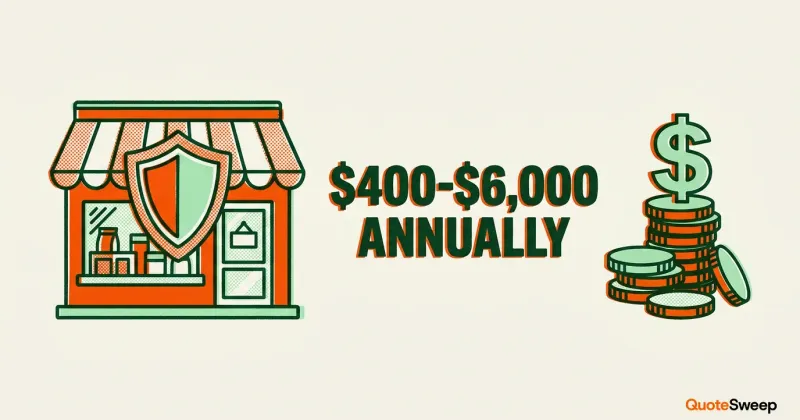
A business owner's policy (BOP) costs between $400 and $6,000 per year for most small businesses. The actual premium depends on your industry, revenue, employee count, location, building characteristics, and claims history. A low-risk IT consulting firm might pay $500 per year. A restaurant with liquor exposure might pay $4,000 or more.
This guide breaks down BOP pricing by business type, explains the factors that drive cost up or down, and covers what a BOP does and doesn't include – so agents can set client expectations accurately and business owners can understand what they're paying for.
Most small businesses pay between $400 and $6,000 annually for a BOP. Insureon's analysis puts the median closer to $1,000 per year ($83/month) across 42% of customers who pay under $50/month and 28% who pay over $100/month. Industry, location, revenue, and claims history are the four biggest cost drivers.
Average BOP Cost by Business Type
BOP premiums vary significantly by industry because different businesses carry different risk profiles. Here are typical annual cost ranges based on Insureon's small business quoting data and national carrier benchmarks as of early 2026.
| Business Type | Typical Annual BOP Cost | Key Cost Drivers |
|---|---|---|
| IT consulting / professional services | $400–$1,500 | Low physical risk, minimal foot traffic, mostly liability exposure |
| Freelancers / sole proprietors | $300–$800 | Smallest revenue and property exposure |
| Retail store (small) | $1,000–$3,000 | Foot traffic, inventory value, slip-and-fall exposure |
| Office-based business | $500–$1,500 | Low hazard, limited property, standard GL exposure |
| Restaurant (no liquor) | $1,500–$4,000 | Food preparation risk, equipment value, customer injury exposure |
| Restaurant (with liquor) | $2,500–$6,000+ | Liquor liability adds significant premium; some carriers won't write this class |
| Contractor (light) | $1,500–$4,000 | Tools/equipment, job site liability, completed operations |
| Contractor (heavy) | $3,000–$6,000+ | Higher injury risk, expensive equipment, larger completed operations exposure |
| Hair salon / barbershop | $800–$2,000 | Professional liability component, chemical exposure, client injury |
| E-commerce (home-based) | $300–$1,000 | Minimal physical location risk, inventory value if applicable |
These ranges represent typical small businesses with under $2 million in revenue, fewer than 25 employees, and clean claims history. Businesses outside those parameters – higher revenue, more employees, prior claims – will see higher premiums.
Important caveat for agents: These are general ranges to set client expectations. Actual quotes vary by carrier, state, class code, and underwriting. Always quote the specific account rather than relying on industry averages.
BOP Premiums by Industry
The table below provides a more detailed breakdown of BOP pricing by industry, including coverage considerations and endorsements agents should discuss with each class. Ranges reflect typical small businesses with under $2 million in revenue, clean loss history, and standard limits ($1M/$2M GL, replacement cost property).
| Industry | Typical Annual BOP Premium | Key Coverage Considerations | Common Endorsements Needed |
|---|---|---|---|
| Restaurants | $1,500–$6,000+ | Food contamination liability, equipment breakdown, grease fire exposure, high foot traffic. Liquor service pushes premiums to the upper range. | Liquor liability, food spoilage, equipment breakdown, hired/non-owned auto |
| Contractors (general/trade) | $1,500–$5,000 | Tools and equipment on job sites, completed operations exposure, subcontractor liability. Heavy trades (roofing, electrical) skew higher. | Inland marine (tools/equipment), additional insured for GCs, waiver of subrogation |
| Retail Stores | $1,000–$3,000 | Inventory value, slip-and-fall exposure, theft, seasonal stock fluctuations. High-value inventory (jewelry, electronics) increases property premiums. | Employee dishonesty, signs/glass coverage, seasonal inventory increase |
| Professional Services | $400–$1,500 | Low physical hazard, minimal property exposure, primary risk is liability from advice or services rendered. BOP GL does not cover professional negligence. | Professional liability / E&O (separate policy, but often quoted alongside), cyber liability |
| IT / Technology | $400–$1,200 | Equipment value (servers, laptops), data breach exposure, errors in deliverables. Many carriers offer competitive rates for this low-hazard class. | Cyber liability, technology E&O, data breach response |
| Cleaning Services | $800–$2,500 | Chemical exposure, client property damage, workers on third-party premises. Janitorial vs. specialty cleaning (e.g., post-construction) affects rate. | Care/custody/control, hired/non-owned auto, janitorial bond |
| Landscaping | $1,200–$3,500 | Equipment value, job site injuries, property damage to client landscaping or structures, seasonal operations. | Inland marine (mowers, trailers), pesticide/herbicide liability, hired/non-owned auto |
These figures are directional – actual premiums depend on the carrier, state, revenue, and specific operations. The point for agents: quoting across carriers for each class consistently reveals meaningful rate differences, especially for industries where carrier specialization varies.
What Drives BOP Cost Up or Down
BOP pricing isn't arbitrary. Carriers evaluate specific risk factors when calculating premiums. Understanding these factors helps agents explain pricing to clients and identify which accounts might benefit from shopping across multiple carriers.
Industry Classification
The single biggest pricing factor is the type of business. Carriers assign each business a class code – either based on NAICS codes, ISO class codes, or their own proprietary classification system. The class code determines the base rate, which reflects the historical loss experience for that type of business.
A professional services firm has a fundamentally different risk profile than a restaurant. The base rate for a consulting firm might be $0.15 per $100 of revenue. The base rate for a restaurant might be $0.80 per $100 of revenue. This classification-level difference accounts for most of the pricing spread you see across business types.
This is also where carrier appetite matters most. A carrier that specializes in a particular class – say, Hiscox in professional services or Progressive in contractors – may offer significantly better rates for that class than a generalist carrier. Shopping across carriers for a specific class code is where the real savings happen.
Revenue and Payroll
Revenue is the primary exposure base for BOP general liability. Higher revenue generally correlates with more business activity, more customer interactions, and more potential for claims. A retail store doing $2 million in annual revenue pays more than the same type of store doing $500,000.
Payroll affects the workers' compensation component if bundled, and can influence BOP pricing indirectly through the general liability exposure calculation. Some carriers use employee count as a simpler proxy.
Location
Location affects BOP pricing in three ways:
State rating factors. Insurance regulation, litigation costs, and claims frequency vary by state. The same business might pay 30% more for a BOP in New York than in Iowa.
Within-state geography. Urban locations generally cost more than rural ones due to higher property values, more foot traffic, and higher crime and litigation rates.
Catastrophe exposure. Businesses in hurricane, earthquake, or wildfire zones may see higher property premiums or specific deductibles for catastrophe events.
Building Characteristics
The property component of a BOP depends heavily on the building:
- Owned vs. leased. A business that owns its building insures the structure itself. A tenant insures only their contents and improvements.
- Construction type. Frame construction costs more to insure than masonry or fire-resistive construction.
- Age and condition. Older buildings with outdated electrical, plumbing, or roofing cost more.
- Square footage. More space means more property exposure and higher replacement cost.
- Fire protection. Proximity to a fire station and the presence of sprinkler systems reduce premiums.
Claims History
A business with no claims in the past three to five years will get better rates than one with recent losses. Some carriers run loss history reports automatically during the quoting process. Others request loss runs from the current carrier.
The type of claim matters too. A single small property claim has less impact than multiple liability claims. A pattern of claims – even small ones – signals higher risk to underwriters than a single large loss.
Coverage Limits and Deductibles
Higher coverage limits cost more. The standard BOP includes:
- General liability: Typically $1 million per occurrence / $2 million aggregate
- Property: Based on replacement cost of building and/or contents
- Business income: Coverage for lost income during a covered interruption
Choosing a higher deductible – say, $2,500 instead of $1,000 – reduces the premium. For businesses that can absorb a small loss without filing a claim, a higher deductible is often the most cost-effective choice.
What a BOP Covers (and What It Doesn't)
A BOP bundles two core coverages into a single policy at a lower combined cost than buying them separately.
What's Included
Commercial property insurance. Covers the business's physical assets – the building (if owned), contents, equipment, furniture, inventory, and signage. Standard BOP property coverage is written on a "special form" basis, meaning it covers all causes of loss except those specifically excluded (like flood and earthquake).
General liability insurance. Covers third-party claims for bodily injury, property damage, and personal/advertising injury. If a customer slips on a wet floor in your client's store, the BOP's general liability pays the medical bills and legal defense. Standard ISO CGL limits are $1 million per occurrence and $2 million aggregate.
Business income / business interruption. Covers lost income and continuing expenses if the business can't operate due to a covered property loss. If a fire closes the restaurant for three months, business income coverage pays for the revenue lost during that period and ongoing fixed expenses like rent and payroll.
Most BOPs also include several supplemental coverages: equipment breakdown, limited cyber coverage (varies by carrier), employee dishonesty, and coverage for valuable papers and records.
What's NOT Included
A BOP is the foundation of a small business insurance program, but it has clear boundaries:
Workers' compensation. Not part of a BOP. Required by law in almost every state for businesses with employees. Must be purchased as a separate policy.
Commercial auto. Vehicles used for business need a separate commercial auto policy. The BOP does not cover accidents or damage involving business vehicles.
Professional liability / errors and omissions (E&O). If the business provides professional advice or services, claims alleging negligent work or bad advice require a separate professional liability policy. This is essential for consultants, accountants, architects, real estate agents, and similar professionals. For a detailed comparison, see our guide on professional liability vs. general liability.
Cyber liability (full coverage). While some BOPs include a limited cyber endorsement, businesses with meaningful cyber exposure – those handling customer data, processing payments, or relying on technology – need a standalone cyber liability policy.
Employment practices liability (EPLI). Claims alleging wrongful termination, discrimination, or harassment require separate EPLI coverage.
Umbrella / excess liability. For businesses that need higher liability limits than the BOP provides, an umbrella policy sits above the BOP and provides additional coverage.
Understanding these gaps is essential for agents building a complete commercial insurance program. The BOP conversation should always include a discussion of what's not covered and whether additional policies are needed.
When a Business Outgrows a BOP
A BOP is designed for small businesses – and most carriers have eligibility limits that define what qualifies. When a business grows past those limits, it needs separate commercial property and general liability policies instead of a bundled BOP.
Typical BOP Eligibility Limits
- Revenue: Most carriers cap BOP eligibility at $3 million to $10 million in annual revenue, depending on the business class.
- Square footage: Building size limits typically range from 25,000 to 100,000 square feet, depending on the carrier and occupancy type.
- Employee count: Some carriers set employee limits, typically 50 to 100 employees.
- Location count: Some BOPs are limited to a single location. Multi-location businesses may need separate policies or a commercial package.
These limits vary significantly by carrier. Progressive might cap BOP eligibility for a specific class at $3 million in revenue, while Hartford allows up to $5 million for the same class. This is another reason why quoting across carriers matters – one carrier's BOP limitation might not apply at another carrier.
Signs a Client Has Outgrown Their BOP
Beyond explicit eligibility limits, look for these indicators:
- Revenue approaching carrier limits. If a client is at $4 million and their carrier caps at $5 million, they'll outgrow the BOP soon. Proactive remarketing avoids a forced transition.
- Multiple locations. Expanding to a second or third location often pushes businesses past BOP eligibility.
- Specialized coverage needs. If the client needs manuscript endorsements, unusual sublimits, or industry-specific coverage modifications, a commercial package policy provides more flexibility.
- High-value inventory or equipment. When property values exceed BOP property sublimits, a standalone commercial property policy with customized limits is more appropriate.
How BOP Pricing Differs by Carrier
Different carriers price the same risk differently – sometimes dramatically. A few patterns to be aware of:
Carrier Specialization Matters
Carriers that specialize in specific business classes often offer better rates for those classes. Some well-known specializations as of early 2026:
- Hiscox and NEXT Insurance tend to be competitive for professional services, IT consulting, and other low-hazard service businesses.
- Progressive has strong appetite for contractors, retail, and a broad range of standard small commercial classes.
- biBERK (Berkshire Hathaway) targets small businesses with simple risk profiles – often competitive for straightforward BOP accounts.
- Hartford has historically been strong in small commercial across a wide range of classes, with a focus on established businesses.
- Society Insurance, West Bend, Erie – regional carriers that often offer competitive pricing in their operating territories, particularly for hospitality, retail, and service businesses.
The pattern is consistent: the carrier with the best rate for an IT firm is often not the carrier with the best rate for a restaurant. Quoting across your full carrier panel ensures you find the best fit for each specific account.
Direct Writers vs. Independent Agent Carriers
Some carriers sell directly to business owners (Hiscox, NEXT, biBERK) and also through independent agents. Others work exclusively through independent agents (Society, West Bend, many regionals). Pricing may differ between direct and agent-mediated channels for the same carrier.
For agents, the competitive advantage is access to carriers and classes that direct-to-consumer platforms can't reach – particularly complex risks, larger accounts, and specialty classes. For straightforward accounts, the value proposition is finding the best rate across more carriers than any business owner would check on their own.
Why Shopping Multiple Carriers Matters for BOP
The pricing spread for BOP across carriers is wider than most agents expect. When we run the same BOP account across 10+ carriers, we regularly see 40% or more variation between the highest and lowest quote – the right carrier for a specific class code can meaningfully change the outcome for your client. A comparative rater eliminates the manual work of checking each carrier individually. For a walkthrough of how commercial comparative raters work, see our complete guide.
How to Quote BOP Efficiently
For agents quoting BOP regularly, the workflow directly impacts how many accounts you can handle per day.
The Manual Approach
Log into each carrier portal individually. Enter the client's business information – name, address, NAICS code, revenue, employee count, building details, coverage preferences. Wait for the quote. Move to the next carrier. Repeat 8 to 15 times.
For a typical small commercial BOP account, this takes 45 to 90 minutes across a full carrier panel. An agent quoting five BOP accounts per day can spend most of their working hours on data entry.
The Automated Approach
Use a comparative rater to enter client data once and submit to multiple carriers simultaneously. The rater handles the field mapping – translating your single application into each carrier's specific format – and returns quotes for comparison.
API-based raters connect to a fixed set of carriers (typically 35 to 40). AI web agents raters like QuoteSweep work with any carrier that has a web portal – including regional and specialty carriers that API tools can't reach. For a comparison of available tools, see our commercial insurance quoting software buyer's guide.
The time savings compound: instead of 90 minutes per account, you're spending 5 minutes. That recovered time goes directly to quoting more accounts, servicing clients, or pursuing new business. For more on how quoting efficiency drives agency growth, see how to grow your agency without hiring.
Frequently Asked Questions
How much does a BOP cost per month?
Most small business BOPs cost between $30 and $500 per month, depending on the business type, size, and location. A low-risk professional services firm might pay $35 to $125 per month. A restaurant or contractor typically pays $150 to $500 per month. Most carriers offer monthly payment options, though paying annually often provides a small discount.
Is a BOP cheaper than buying property and liability separately?
Yes, in almost all cases. A BOP typically saves 15–25% compared to purchasing commercial property and general liability as standalone policies. Carriers offer this discount because a bundled policy is more efficient to administer and reduces the chance of coverage gaps.
Do all businesses need a BOP?
Not all businesses need a BOP specifically, but most businesses need the coverages a BOP provides – commercial property and general liability. Businesses that don't own or lease commercial space (a freelancer working from home, for example) may only need general liability. Businesses that exceed BOP eligibility limits need separate property and liability policies instead. But for the vast majority of small businesses with a physical location, a BOP is the most cost-effective way to obtain essential coverage.
Can I get a BOP with no employees?
Yes. A BOP doesn't require employees – sole proprietors and freelancers frequently purchase BOPs to cover their business property and liability exposure. Workers' compensation is not part of a BOP, so the employee count only affects the BOP if the carrier uses it as a rating factor for general liability exposure.
What's the best carrier for BOP?
There's no single best carrier – it depends on the business class, state, and specific risk characteristics. A carrier that offers the lowest rate for IT consulting may be expensive for restaurants. The most effective approach is quoting the specific account across your full carrier panel to find the best fit. For agents, this means using a comparative rater or manually shopping multiple carriers for each account.
How often should I remarket a client's BOP?
At minimum, review BOP accounts at every renewal – typically annually. Remarketing is especially worthwhile when the renewal premium increases by more than 10%, when the client's business has changed significantly (revenue growth, new location, different operations), or when new carriers have entered the market with competitive pricing. For a complete remarketing workflow, see our guide on how to remarket commercial renewals in 5 minutes.