Pollution Liability Insurance Explained
Pollution liability insurance covers the cost of cleaning up a pollution condition and the claims that come with it. If your business causes a spill, a release, or contamination, whether at a job site or your own location, the cleanup and any third-party claims can be enormous, and most businesses assume their general liability covers it. It usually does not, which is exactly the gap this coverage fills.
Why general liability excludes pollution
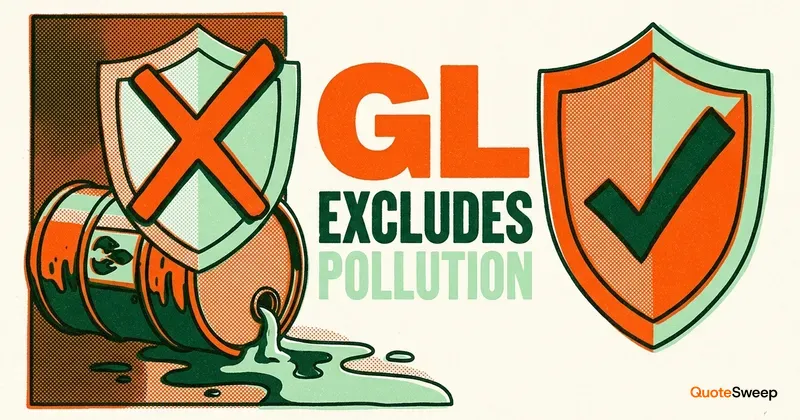
Standard general liability policies contain a broad pollution exclusion. After large environmental losses decades ago, insurers carved pollution out of GL, so a spill, fuel release, or contamination event is typically not covered by a business's general liability policy. Pollution liability is the separate coverage built to respond to those events.
What it covers
Pollution liability generally responds to a pollution condition, paying for:
- Cleanup and remediation costs, on your site or a third party's
- Third-party bodily injury and property damage from the pollution
- Legal defense costs for covered claims
- Sometimes emergency response and related expenses
Coverage forms vary, so the specific triggers, whether it covers gradual releases, and any exclusions depend on the policy.
Who needs it
- Contractors — through contractors pollution liability (CPL), covering releases from their work (a fuel spill, a chemical release, disturbed contamination). Project owners and general contractors often require it.
- Businesses with a fixed location — through site pollution or premises pollution coverage, for storage tanks, chemicals, or contamination exposure.
- Higher-risk operations — environmental services, waste handling, fuel, manufacturing, and similar trades.
Even businesses that do not think of themselves as "polluters" can trigger a claim, for example a contractor whose work disturbs existing contamination.
What drives the cost
- Operations and materials handled
- Whether it is contractors (CPL) or fixed-site coverage
- Project or revenue size
- Location and environmental exposure
- Claims history
Because a general contractor and an environmental-services firm carry very different exposures, quoting your actual operation is the reliable way to price it.
How to get covered
- An independent agent can quote contractors pollution or site pollution with the general liability a business needs.
- A specialty brokerage that places environmental and hard-to-place risk is a fit for higher-exposure operations. One AI-native option that lists pollution liability among the coverages it places is Panta.
Compare whether it covers gradual as well as sudden releases, the limits, and any exclusions for your specific operations, not just the price.
Frequently Asked Questions
Does general liability cover pollution?
Generally no. Standard general liability policies contain a broad pollution exclusion, which is why pollution liability is a separate coverage.
What is contractors pollution liability (CPL)?
CPL covers pollution conditions arising from a contractor's operations, such as a spill or a release during work. Project owners and general contractors frequently require it.
Who needs pollution liability insurance?
Contractors, businesses that store or handle chemicals or fuel, environmental and waste-services firms, and any operation that could cause or disturb contamination.
Is pollution liability the same as environmental insurance?
Environmental insurance is the broad category; pollution liability, including contractors pollution and site pollution, is the coverage within it that responds to pollution conditions.
Get a quote for pollution liability insurance
For related reading, see general liability and builders risk insurance.