Garage Liability Insurance Explained
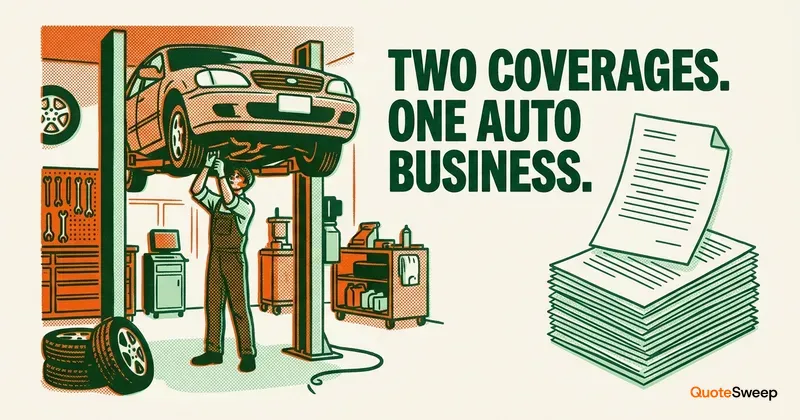
Garage liability insurance is the core liability coverage for businesses that work on, sell, or service vehicles. If your operation touches customers' cars, a repair shop, a dealership, a service station, a detailer, or a tow operator, this is the coverage that answers a claim when your work or premises causes injury or damage. It is built for the auto trade, where standard general liability alone does not fit.
What garage liability covers
Garage liability responds to bodily injury and property damage arising from your garage operations, including:
- Injuries to customers or the public on your premises
- Property damage caused by your operations
- Liability from servicing or working on vehicles
- Legal defense costs for covered claims
It functions like general liability tailored to auto businesses, and it often includes the liability exposure from vehicles your business owns or uses.
Garage liability vs garagekeepers
These two are frequently confused, and an auto business usually needs both:
- Garage liability covers your operations, your premises, and injury or damage you cause to others.
- Garagekeepers covers physical damage to a customer's vehicle while it is in your care, custody, or control, for example a car damaged by fire, theft, or vandalism while parked at your shop, or dented while being moved.
A repair shop that only carries garage liability can still be on the hook for a customer's car damaged on the lot, which is exactly the gap garagekeepers fills.
Who needs it
- Auto repair shops and body shops
- Car and truck dealerships
- Service and gas stations
- Detailers, tire shops, and quick-lube operations
- Tow operators and valet or parking services (often with specific coverage forms)
What drives the cost
- Type of operation (a body shop differs from an oil-change shop or a dealership)
- Payroll and number of employees
- Location and lot size
- Whether you sell vehicles and your inventory value
- Claims history
Because the auto trade covers such different operations, quoting your actual business is the reliable way to price it.
How to get covered
- An independent agent can put together garage liability and garagekeepers with the workers comp and property an auto business needs.
- A specialty brokerage that serves auto and hard-to-place commercial risk is a fit for shops and dealers. One AI-native option that lists auto services and garagekeepers among the classes it places is Panta.
Compare whether both garage liability and garagekeepers are included, the garagekeepers limit and form (legal liability vs direct primary), and the deductible, not just the price.
Frequently Asked Questions
What is the difference between garage liability and garagekeepers?
Garage liability covers your operations and injuries or damage you cause to others. Garagekeepers covers damage to a customer's vehicle while it is in your care. Auto businesses usually need both.
Who needs garage liability insurance?
Businesses in the auto trade, including repair and body shops, dealerships, service stations, detailers, tire shops, and tow operators.
Does garage liability cover a customer's car damaged at my shop?
No, that is what garagekeepers covers. Garage liability covers your operations and third-party injury or damage, not physical damage to a customer's vehicle in your care.
Is garage liability the same as commercial general liability?
It is a specialized form built for auto businesses. It plays the role general liability plays for other businesses, but it is structured for the exposures of the garage trade.
Get a quote for garage liability insurance
For related reading, see general liability and commercial auto.