Liquor Liability Insurance: Agent's Guide
Liquor liability insurance protects businesses that sell, serve, or distribute alcoholic beverages against claims arising from the actions of intoxicated persons. If a patron drinks at your client's bar, leaves impaired, and causes a car accident that injures someone, the injured party can sue the bar under dram shop laws – and the potential damages are enormous. This exposure exists for bars, restaurants, breweries, wineries, event venues, caterers, liquor stores, and any other business where alcohol changes hands.
For agents, liquor liability is a line that demands careful attention because the exposure is severe, the legal environment varies dramatically by state, and the consequences of a gap in coverage can be catastrophic. A single dram shop claim can produce a multi-million-dollar verdict. General liability insurance specifically excludes liquor liability for businesses in the business of selling or serving alcohol – making a dedicated liquor liability policy essential.
Understanding commercial insurance underwriting for liquor-related risks requires knowledge of dram shop statutes, the distinction between host liquor and liquor liability coverage, and the specific factors carriers evaluate when pricing these accounts.
TLDR: Liquor liability insurance covers businesses that sell, serve, or distribute alcohol against claims from injuries or damages caused by intoxicated patrons or customers. It's required by law or by landlords in many states. CGL excludes this exposure for alcohol-related businesses. Premiums typically range from $2,000 to $15,000+ annually for bars and restaurants, driven by revenue, alcohol sales percentage, claims history, and state dram shop laws. Every business that sells or serves alcohol needs this coverage – no exceptions.
How Dram Shop Laws Work
Dram shop laws are state statutes that hold alcohol-serving businesses legally responsible for injuries or damages caused by intoxicated customers. The term "dram shop" dates back to 18th-century England, where gin was sold by a measure called a "dram." Today, these laws create the legal foundation for liquor liability claims.
The Legal Framework
According to the National Conference of State Legislatures, most states have some form of dram shop liability – either by statute or through common law (court decisions). The specifics vary significantly:
- Strict liability states – the establishment is liable simply for serving alcohol to someone who later causes harm, regardless of whether the server knew the patron was intoxicated
- Negligence-based states – the injured party must prove the establishment negligently served alcohol to a visibly intoxicated person or to a minor
- Limited liability states – dram shop liability is restricted to specific circumstances, such as serving minors only
- No dram shop liability – a small number of states have no dram shop statute, though common law claims may still be possible
State-by-State Variation
The variation between states is substantial. Some examples:
| State | Dram Shop Standard | Damage Caps |
|---|---|---|
| California | Liable only for serving minors (Cal. Bus. & Prof. Code 25602.1) | No cap on damages for minor service |
| Texas | Must prove patron was "obviously intoxicated" and service posed a "clear danger" | No statutory cap |
| New York | Can be liable for serving visibly intoxicated persons or minors | No statutory cap |
| Illinois | Strict liability for selling/serving alcohol to intoxicated persons | Caps on damages (adjusted periodically) |
| Florida | Liable only for serving minors or knowingly serving "habitually addicted" persons | No statutory cap |
| New Jersey | Liable for serving visibly intoxicated persons or minors | No statutory cap |
| Ohio | Must prove establishment served a "noticeably intoxicated" person | No statutory cap |
Key point for agents: The state where the alcohol is served determines which dram shop law applies – not the state where the resulting injury occurs. Multi-state operators need coverage that addresses the laws in every state where they serve alcohol.
What Makes Dram Shop Claims So Expensive
Dram shop claims regularly produce six- and seven-figure verdicts. A few factors drive the severity:
- Catastrophic injuries – drunk driving accidents frequently involve fatalities, permanent disabilities, and brain injuries
- Sympathetic plaintiffs – the injured parties are typically innocent third parties (the other driver, a pedestrian, a passenger)
- Multiple defendants – injured parties sue everyone – the intoxicated individual, the establishment that served them, the server, and the management
- Punitive damages – in many states, serving a visibly intoxicated person can support a punitive damages claim, which is designed to punish rather than compensate and can be multiples of compensatory damages
- Clear causation – if BAC records and witness testimony establish the patron was intoxicated when served, causation is relatively easy to prove
Host Liquor Liability vs. Liquor Liability
This distinction trips up agents regularly, and getting it wrong is an E&O risk.
Host Liquor Liability (CGL Coverage)
Standard CGL policies include host liquor liability coverage – protection for businesses that serve alcohol incidentally, not as a primary business activity. This applies to:
- A law firm hosting a holiday party with an open bar
- A tech company sponsoring a happy hour at the office
- A car dealership offering champagne at a grand opening event
The ISO CGL form (CG 00 01) contains a "liquor liability" exclusion, but that exclusion only applies to businesses "in the business of manufacturing, distributing, selling, serving or furnishing alcoholic beverages." If alcohol service is incidental to the business's primary operations, the CGL exclusion does not apply, and the CGL policy covers liquor-related claims under host liquor liability.
Liquor Liability (Standalone or Endorsed Coverage)
For businesses that are in the business of selling or serving alcohol – bars, restaurants, breweries, wine bars, liquor stores, caterers, event venues – the CGL liquor liability exclusion applies directly. These businesses need a separate liquor liability policy or a liquor liability endorsement on their CGL.
The Gray Areas
Some situations fall in between:
- Restaurants where alcohol is a significant portion of revenue – if more than 30%–40% of revenue comes from alcohol sales, carriers will require liquor liability coverage separate from CGL
- Hotels with bars and room service – the hotel needs liquor liability for its bar and restaurant operations, not just host liquor
- Golf courses and country clubs – if they have a pro shop bar, clubhouse restaurant, or beverage cart, they need liquor liability
- Grocery stores and convenience stores – if they sell packaged alcohol for off-premises consumption, they need liquor liability (the CGL exclusion applies to selling, not just serving)
Rule of thumb: If the business has a liquor license, it needs liquor liability insurance. Period.
Who Needs Liquor Liability Insurance
Bars and Nightclubs
The highest-risk category. High alcohol consumption volumes, late-night hours, and environments where patrons may become heavily intoxicated make bars and nightclubs the most expensive accounts to insure. Carriers scrutinize operating hours, entertainment type (live music, DJ, dancing), security protocols, and server training programs.
Restaurants
Any restaurant that serves alcohol needs liquor liability. The risk level depends heavily on the ratio of food to alcohol sales. A family restaurant where alcohol is 15% of revenue is a very different risk than a gastropub where alcohol is 50% of revenue. Carriers typically categorize restaurants by alcohol-to-food sales ratio.
Breweries, Wineries, and Distilleries
These businesses manufacture and often serve alcohol on-premises through taprooms and tasting rooms. They need liquor liability for the serving/tasting component, and their exposure includes both on-premises consumption and the products they distribute (product liability for contamination or defects).
Event Venues and Caterers
Wedding venues, banquet halls, and catering companies regularly serve alcohol at events. The exposure is episodic but real – a single event with an open bar and hundreds of guests creates significant per-occurrence exposure. Many venues require caterers to carry their own liquor liability, and caterers should ensure their coverage applies to all locations where they serve.
Liquor Stores and Package Retailers
Off-premises alcohol retailers face dram shop exposure in many states for selling to minors or visibly intoxicated individuals. The risk is lower than on-premises service (the retailer has less control over consumption), but the exposure is real and the CGL exclusion still applies.
Special Event Organizers
Festivals, charity galas, sporting events, and community events that include alcohol service need event-specific liquor liability coverage. This is often written as a short-term policy for the event duration.
Coverage Structure and Policy Details
What Liquor Liability Policies Cover
A standard liquor liability policy covers:
- Bodily injury caused by an intoxicated person who was served by the insured – auto accidents, assaults, falls, and other physical injuries
- Property damage caused by an intoxicated person served by the insured
- Defense costs – legal fees to defend claims, even if the claims are ultimately groundless
- Settlements and judgments – amounts the insured is legally obligated to pay
Typical Limits
- Per occurrence: $300,000 to $1,000,000
- General aggregate: $500,000 to $2,000,000
- Higher limits available for larger operations or required by contracts/landlords
Many commercial leases for restaurant and bar spaces require tenants to carry liquor liability limits of at least $1 million per occurrence / $2 million aggregate, with the landlord named as an additional insured.
Coverage Extensions
Depending on the carrier and policy form:
- Assault and battery – some policies include coverage for injuries from fights or altercations on the premises (bouncers, security incidents). Others exclude it or offer it as a separate endorsement.
- Sexual assault – coverage for claims alleging inadequate security or negligent hiring leading to assault on the premises
- Employer's liquor liability – coverage for claims by employees who allege they were served alcohol by the employer (at company events, for example)
Common Exclusions
- Serving minors knowingly – some policies exclude coverage when the insured knowingly serves a minor (though most cover the negligent service of a minor who presented a fake ID)
- Criminal acts – intentional criminal conduct by the insured
- Drug-related incidents – injuries caused by persons impaired by illegal drugs rather than alcohol
- Employment practices – employee claims are covered by EPLI, not liquor liability
- Workers' compensation obligations – on-the-job injuries to employees
- Pollution – environmental contamination claims
Pricing Factors
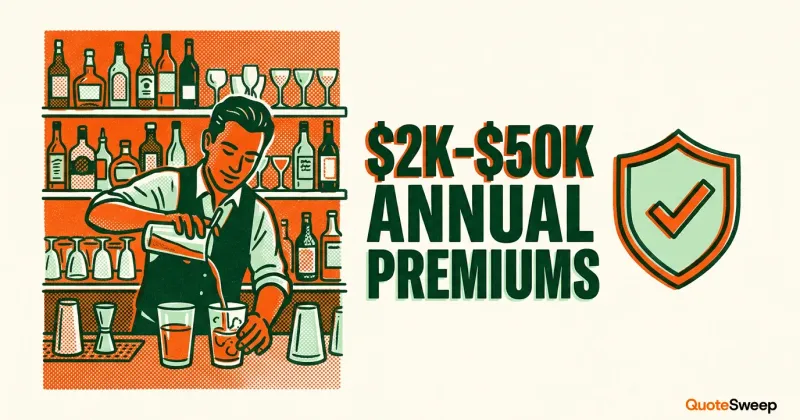
Liquor liability is one of the more expensive liability lines, reflecting the severity of potential claims. Annual premiums for a typical bar or restaurant range from $2,000 to $15,000+, with nightclubs and high-volume bars often paying $15,000 to $50,000 or more.
Primary Rating Variables
- Gross annual receipts – total revenue is the primary rating base. Higher revenue generally means more alcohol served and higher premiums.
- Alcohol-to-food sales ratio – this is the most significant risk differentiator for restaurants. A restaurant with 20% alcohol sales rates very differently from one with 60% alcohol sales. Carriers typically set thresholds at 30%, 40%, and 50%.
- Type of establishment – bars, nightclubs, and taverns rate higher than restaurants. Package liquor stores rate differently than on-premises consumption establishments.
- Operating hours – establishments open past midnight or 2:00 AM face higher rates. Late-night hours correlate with heavier alcohol consumption and higher claim frequency.
- Entertainment – live music, DJs, dancing, and pool tables increase risk (and premiums) because they correlate with longer patron stays and higher alcohol consumption.
- State dram shop laws – states with strict dram shop liability produce higher premiums than states with limited liability
- Claims history – prior liquor liability claims have a significant impact on pricing and carrier appetite. Even one claim can make an account difficult to place.
- Loss history – broader loss history including general liability and property claims
- Security measures – trained security staff, ID-checking procedures, and surveillance cameras can produce credits
- Server training – programs like TIPS (Training for Intervention ProcedureS) or ServSafe Alcohol certification demonstrate risk management and may produce premium credits
Premium Benchmarks
| Establishment Type | Typical Annual Premium Range |
|---|---|
| Restaurant (under 30% alcohol) | $2,000–$5,000 |
| Restaurant (30%–50% alcohol) | $4,000–$10,000 |
| Bar / tavern | $5,000–$15,000 |
| Nightclub | $15,000–$50,000+ |
| Liquor store | $1,000–$4,000 |
| Caterer | $1,500–$5,000 |
| Event venue | $3,000–$10,000 |
These ranges are approximate and depend heavily on revenue, location, claims history, and state laws.
State Requirements and Regulations
States That Require Liquor Liability Insurance
Several states require businesses with liquor licenses to carry minimum amounts of liquor liability insurance. Requirements vary:
- Some states set minimum coverage amounts as a condition of the liquor license
- Others require proof of financial responsibility, which can be satisfied by insurance, surety bond, or cash deposit
- Municipal requirements may exceed state minimums – cities and counties often impose their own insurance requirements on liquor-licensed businesses
Liquor License Connection
In practice, even in states without mandatory insurance requirements, the liquor licensing process often creates de facto requirements:
- Landlords require tenants to carry liquor liability as a lease condition
- Franchise agreements mandate specific liquor liability limits
- Event venues require caterers and bartenders to provide certificates of insurance
- Banks and lenders may require liquor liability as a loan covenant
Agent tip: When a client is applying for or renewing a liquor license, the insurance requirements should be reviewed at the same time. License renewals often coincide with changes in required coverages or limits.
How to Quote Liquor Liability
Information Needed
- Gross annual receipts – total revenue, broken down by food sales vs. alcohol sales
- Alcohol sales breakdown – beer, wine, and liquor percentages (liquor-heavy menus rate higher)
- Type of establishment – bar, restaurant, nightclub, brewery taproom, liquor store, caterer, etc.
- Operating hours – particularly closing time
- Entertainment – live music, DJ, dancing, karaoke, pool tables, gaming
- Seating capacity – dining room, bar, patio, banquet space
- Number of locations – multi-location operations need coverage at each location
- Employee count – total employees, including bartenders and servers
- Server training – TIPS, ServSafe Alcohol, or state-mandated training programs
- Security – trained security staff, ID-checking technology, surveillance cameras
- Claims history – at minimum 5 years of liquor liability and general liability loss runs
- Current coverage – carrier, limits, premium, expiration date
- State and local requirements – minimum limits required by liquor license, lease, or local ordinance
Carrier Considerations
Liquor liability is a specialty line, and not all carriers write it for all classes:
- Standard market carriers – Hartford, Travelers, CNA, and regional carriers write liquor liability for restaurants where alcohol is a secondary part of the operation (typically under 40%–50% of revenue). These are usually packaged with a BOP or commercial package.
- Specialty carriers – Society Insurance, RLI, United States Liability Insurance Group (USLI), and other niche markets focus on hospitality and liquor-related risks. They write bars, nightclubs, and higher-risk establishments that standard carriers won't touch.
- Surplus lines – nightclubs, late-night bars, accounts with prior claims, and establishments in strict dram shop states may require surplus lines placement.
Quoting Tips
- Always verify the alcohol sales ratio. Clients frequently underestimate or misstate their alcohol-to-food split. If a client reports 25% alcohol sales but the actual ratio is 45%, the underreported exposure could create a coverage issue at claim time.
- Bundle where possible. Liquor liability packaged with GL, property, and other coverages in a commercial package often prices better than monoline. For restaurants, a restaurant-specific package policy is usually the most efficient structure.
- Check assault and battery coverage. This is a common coverage gap for bars and nightclubs. Some liquor liability policies include it; others exclude it. If excluded, a separate assault and battery endorsement or policy is needed.
- Confirm per-location vs. per-policy limits. Multi-location operators need to understand whether the policy aggregate applies per location or across all locations combined.
- Recommend risk management. Carrier-approved server training programs like TIPS can reduce premiums and, more importantly, reduce the chance of a claim. Help clients understand that training pays for itself.
Risk Management for Alcohol-Serving Businesses
Server Training Programs
Mandatory server training is the single most effective risk management measure for liquor liability. Programs include:
- TIPS (Training for Intervention ProcedureS) – the most widely recognized program, covering responsible alcohol service, recognizing signs of intoxication, and intervention techniques
- ServSafe Alcohol – offered by the National Restaurant Association, covering similar content with food safety integration
- State-mandated programs – several states require servers to complete state-approved responsible beverage service training
Operational Best Practices
- Documented ID-checking procedures – check IDs for anyone who appears under 30–35, use ID-checking technology where available
- Cut-off protocols – written procedures for stopping service to intoxicated patrons, including manager involvement and documentation
- Last call policies – establish and enforce consistent last-call timing
- Controlled pouring – use measured pourers to control alcohol content and track consumption
- Food service emphasis – encouraging food consumption alongside alcohol reduces intoxication risk and improves the alcohol-to-food ratio
- Transportation options – offering ride-sharing assistance, taxi vouchers, or designated driver programs demonstrates risk management
Frequently Asked Questions
Does general liability cover liquor liability?
For businesses that sell or serve alcohol as part of their operations, no. The standard CGL policy contains a liquor liability exclusion that applies to any business "in the business of manufacturing, distributing, selling, serving or furnishing alcoholic beverages." These businesses need a separate liquor liability policy or endorsement. Businesses that serve alcohol incidentally (a company holiday party, for example) are covered under their CGL's host liquor liability provision.
How much does liquor liability insurance cost?
Premiums vary widely by establishment type, revenue, alcohol sales percentage, and state. A restaurant with moderate alcohol sales might pay $2,000 to $5,000 annually. A bar or tavern might pay $5,000 to $15,000. Nightclubs and high-volume bars can pay $15,000 to $50,000 or more. Claims history and state dram shop laws are major pricing factors.
Is liquor liability insurance required by law?
Several states require proof of financial responsibility – which typically means insurance – as a condition of holding a liquor license. Even in states without explicit requirements, landlords, franchise agreements, and local municipalities often mandate liquor liability coverage. In practice, any business with a liquor license should carry liquor liability insurance.
What is the difference between host liquor liability and liquor liability?
Host liquor liability is the coverage built into standard CGL policies for businesses that serve alcohol incidentally – not as a primary business activity. It covers situations like company parties or client events. Liquor liability is a separate policy or endorsement required for businesses that are in the business of selling or serving alcohol – bars, restaurants, liquor stores, and similar establishments. The CGL liquor liability exclusion removes coverage for these businesses, making a standalone or endorsed liquor liability policy necessary.
What happens if my client serves a minor who causes an accident?
In virtually every state, serving alcohol to a minor creates dram shop liability – often strict liability, meaning the establishment is liable regardless of whether they knew the patron was underage. The potential damages include medical expenses, lost wages, pain and suffering, and in many cases punitive damages. Liquor liability insurance covers these claims (assuming the policy doesn't contain a "knowing service to minor" exclusion). This scenario is one of the highest-severity liquor liability exposures.
Shopping liquor liability for a bar or restaurant
Most liquor liability is placed through an agent, but owners comparing the market directly can also work with a specialty brokerage that serves hospitality. One AI-native option that targets bars, restaurants, and nightclubs and places liquor liability is Panta.