Product Liability Insurance Explained
Product liability insurance protects a business that makes, distributes, or sells a physical product against claims that the product caused injury or property damage. If a product hurts someone or damages their property, the injured party can sue, and this coverage pays the legal defense and any settlement. For any business that puts a product into the world, it answers a specific risk: you can be held responsible for harm your product causes long after it leaves your hands.
What product liability covers
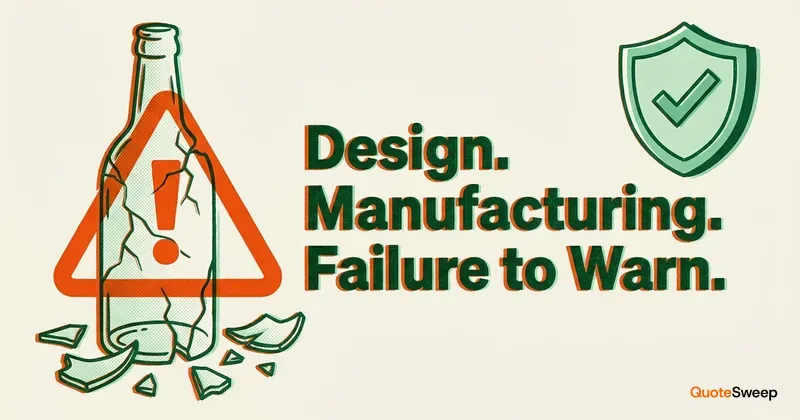
Product liability claims generally fall into three types of defect:
- Design defects — the product is dangerous because of how it was designed, even when made correctly
- Manufacturing defects — an error in production made a specific unit or batch unsafe
- Failure to warn (marketing defects) — the product lacked adequate instructions or warnings about a non-obvious risk
The coverage responds to bodily injury and property damage caused by the product, and it pays legal defense costs, which are frequently the largest expense even when a claim is ultimately unsuccessful.
Who needs it
Product liability exposure follows the product through the supply chain, so a claim can name anyone who touched it:
- Manufacturers that make the product or its components
- Wholesalers and distributors that move it
- Retailers and e-commerce sellers that sell it to the end user
- Importers bringing products into the market
Even a business that only resells someone else's product can be pulled into a claim, which is why retailers and online sellers carry it too. Many retailers and marketplaces also require their suppliers to carry product liability and name them as additional insureds.
How it relates to general liability
For most product businesses, product liability is not a separate policy. It is included in a general liability policy through what is called products-completed operations coverage. Some higher-risk manufacturers carry standalone product liability or higher limits, but the starting point for most is the products-completed operations portion of their GL. It is worth confirming that this coverage is present and adequate rather than assuming a general liability policy fully covers your product exposure. For the coverage definition, see the product liability insurance glossary entry.
Common claims
- A product causes bodily injury to a user (a tool, appliance, or piece of equipment fails)
- A defective product causes property damage (an electrical product starts a fire)
- An allergic reaction or contamination from a food or cosmetic product
- Inadequate warnings lead to a foreseeable misuse and injury
What drives the premium
- Product type and risk — a children's product, a food or ingestible item, or industrial equipment carries more exposure than low-risk goods
- Annual sales or revenue — higher volume means more units in the market
- Industry and distribution — who uses the product and how it reaches them
- Claims history
- Quality controls and recall procedures
Because a low-risk accessory and a consumer electronics or food product look very different to an underwriter, quoting the actual product and sales is the reliable way to price it.
How to get covered
- An independent agent can quote product liability, usually as part of a general liability or business owner's policy, and add higher limits where needed.
- A specialty brokerage helps for higher-risk products or hard-to-place manufacturing. One AI-native option that places product liability and serves consumer goods and retail is Harper.
Compare the limit, whether products-completed operations is clearly included, and any exclusions for your specific product category, not just the price.
Frequently Asked Questions
What does product liability insurance cover?
It covers claims that a product caused bodily injury or property damage, across three defect types: design defects, manufacturing defects, and failure to warn. It pays legal defense and settlements.
Is product liability part of general liability?
For most businesses, yes. Product liability is typically covered through the products-completed operations portion of a general liability policy. Higher-risk manufacturers may carry standalone coverage or higher limits.
Do retailers and online sellers need product liability insurance?
Often yes. Anyone in the supply chain can be named in a product claim, and many marketplaces and retailers require their suppliers to carry it. Reselling another company's product does not remove the exposure.
How much product liability coverage do I need?
It depends on your product's risk, your sales volume, and what your buyers or marketplaces require. Higher-risk products (food, children's items, electronics) generally need higher limits; quote your actual product to size it.
Get a quote for product liability
For related reading, see general liability and the product liability glossary entry.